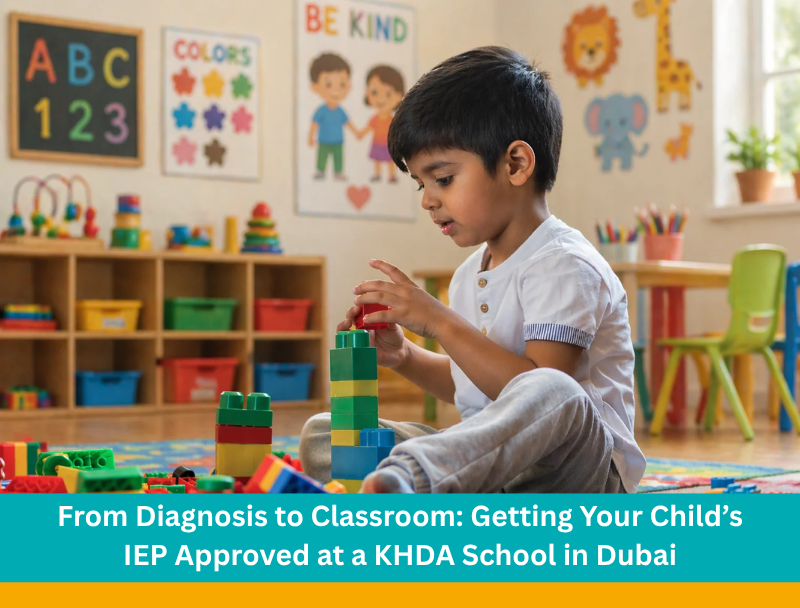
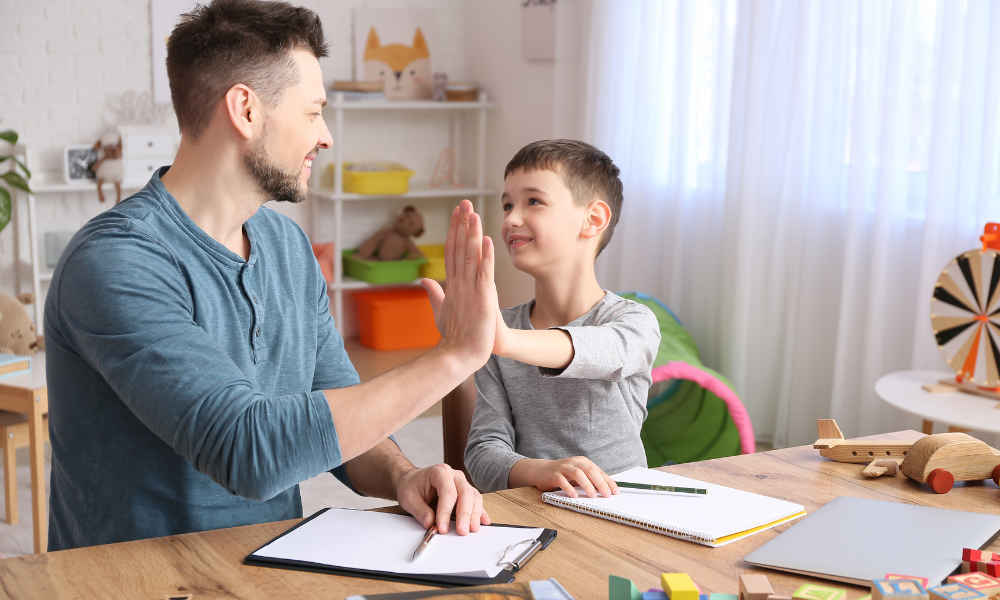
You have probably watched it happen more than once. At a birthday party, a playdate, or a busy school activity, your child stands a little apart from the group. Not because they do not want to connect. Not because they are being unkind or difficult. Simply because the invisible language of social life, those unspoken rules that most children seem to absorb without trying, does not come as naturally to them.
For parents of autistic children across Dubai, that moment can carry a quiet weight. And it tends to raise very reasonable questions. Is this just a phase? Will they find their way on their own? Is there something we can actually do to support them?
The answer to that last question is yes. Social skills are not fixed. They are learnable. With the right support, the right environment, and the right people alongside them, children make genuine, lasting progress. That is the foundation of social skills training: not to change who a child is, but to give them the tools to navigate the social world more confidently on their own terms.
At Esperanza, our CONNECT Programme is built around exactly this principle. It is structured, evidence-based, and designed for the real social situations children encounter in daily life here in Dubai.
What Do We Actually Mean by ‘Social Skills’?
It is worth unpacking this, because the phrase can feel vague at first. Social skills is not one single ability. It is a cluster of related capacities that together allow a child to interact with other people in meaningful, satisfying ways.
These include reading facial expressions and body language, understanding that other people hold different thoughts and feelings from your own, knowing when to speak and when to listen, following the unwritten rules of group play and conversation, and adjusting your behaviour depending on the social context you are in, whether you are at a school classroom in Bur Dubai, a family gathering, or a busy playground near Jumeirah Beach.
Most children absorb these skills gradually through everyday experience, without anyone having to name them explicitly. For many autistic children, however, the social world presents genuine puzzles. The rules are not obvious. The cues are subtle. And missing them, even unintentionally, can lead to misunderstandings, frustration, or feeling left out of the group.
None of that reflects a child’s intelligence or desire to connect. It reflects the way autism affects how the brain processes social information. And it is something that, with structured guidance and practice, can absolutely be built upon.
Signs Parents Often Notice First
Autism presents differently in every child, and social challenges can look very different from one child to the next. That said, parents often describe similar patterns that prompted them to seek support. You might be noticing:
- A consistent preference to play alone, even when other children are nearby and welcoming
- Difficulty with turn-taking, either in games or in conversation
- Distress or confusion when group activities change unexpectedly
- Responses that seem slightly off in timing or tone, such as laughing when others are not, or missing a joke that others find obvious
- Challenges understanding that a friend might feel differently about a situation than they do
- Very literal interpretations of language, making humour or sarcasm hard to follow
- Difficulty knowing how to join a group that has already started playing
If some of these feel familiar, it does not mean something is fundamentally wrong with your child. It means they may benefit from explicit teaching in areas that most children pick up implicitly. That distinction matters, and it is where social skills training begins.
Why Social Communication Can Be More Challenging with Autism
Social interaction requires the brain to process an enormous amount of information simultaneously: tone of voice, facial expression, body posture, the context of the relationship, the expectations of the setting, and much more. For most people, this processing happens automatically and beneath conscious awareness.
For many autistic children, this same processing is more effortful and less automatic. It requires conscious attention, which is both exhausting and limiting, because by the time one piece of information has been processed, the interaction has moved on.
A useful way to think about it: imagine reading a book in a language you have studied, but where nobody ever explained certain grammar rules. You can follow the text with effort and intelligence, but some things that are obvious to a fluent reader remain genuinely confusing, not because you are less capable, but because you are missing a piece of the map.
Social skills training provides that missing map. It names what is usually left unsaid. It makes visible what is typically learned by osmosis. And it does so in a way that respects each child’s individual way of thinking and learning.
The CONNECT Programme at Esperanza: What It Involves
Esperanza’s CONNECT Programme is our structured social skills offering, specifically designed for children and young people who benefit from guided social learning. Sessions run for 60 minutes and take place in small groups, carefully matched by developmental stage and communication style rather than diagnosis or age alone.
The programme follows a four-step process, each stage building naturally on the one before. The goal throughout is to turn your child into what we sometimes call a ‘social detective’, someone who notices, understands, makes decisions, and adapts, rather than someone who simply follows a script.
Step One: Social Awareness
This stage focuses on recognising the social cues that surround us. What does a friend’s body language tell us? What does the tone of someone’s voice signal? What are the unspoken expectations in this particular setting? Children begin to notice the ‘hidden curriculum’ of social life, the rules that exist but are rarely named out loud.
Step Two: Social Understanding
Once a child is better at noticing social information, the next step is making sense of it through perspective-taking. Can I understand that my friend might be feeling disappointed, even if I am feeling fine? Can I hold two different emotional experiences in mind at the same time? This stage draws on theory of mind work, building a more flexible mental model of how other people think and feel.
Step Three: Social Decision-Making
Noticing and understanding are foundational, but action requires its own step. Here children practise choosing responses appropriate to the specific social context. How do I join a group activity that has already started? What do I say when I disagree with a friend? How do I ask for help without the situation escalating? These are not scripted answers but flexible strategies that can be adapted to different situations.
Step Four: Social Reactions
The final step addresses emotional regulation within social situations, because connection depends not just on what you say, but on whether you can stay calm and engaged even when things do not go as expected. This stage helps children manage the strong feelings that social interaction can sometimes produce, so that a disagreement does not become a shutdown and a misunderstanding does not end a friendship.
| How We Group Children at EsperanzaChildren in the CONNECT Programme are not grouped simply by age or diagnosis. We match participants by their specific social-developmental stage and communication style, ensuring that every child in the group is working on genuinely relevant goals. This careful matching is what makes sessions both effective and enjoyable. |
Group Therapy vs. One-to-One: Why Both Have a Role
Parents sometimes ask whether group therapy or individual therapy is better for social skills development. The honest answer is that they serve different purposes, and for most children both have value.
Individual sessions with a speech therapist or occupational therapist are ideal for introducing new concepts, working through specific challenges in a lower-pressure setting, and building foundational skills. But social skills, by their very nature, require other people to practise with. A group provides exactly that.
In a group setting, a child can try out a strategy, observe how a peer responds, adjust in real time, and experience the positive result of something working. That feedback loop, the lived experience of connection, is very difficult to replicate in a one-to-one session. It is why group therapy is sometimes described as a social laboratory.
For children who are earlier in their development, individual therapy may come first, laying groundwork before the group experience. For others, individual and group work run alongside each other from the start. Your child’s therapist will guide this decision based on what is observed during the initial assessment.
The Role of Speech Therapy and Occupational Therapy Together
At Esperanza, social skills development is not the domain of one discipline alone. Our speech and language therapists and occupational therapists work together, because social participation depends on more than communication.
A child who is sensory-sensitive may become overwhelmed in a group setting, not because of any lack of social motivation, but because the noise level, lighting, or physical proximity to others is simply too much to process at once. Until that sensory dimension is addressed, social learning becomes much harder to access.
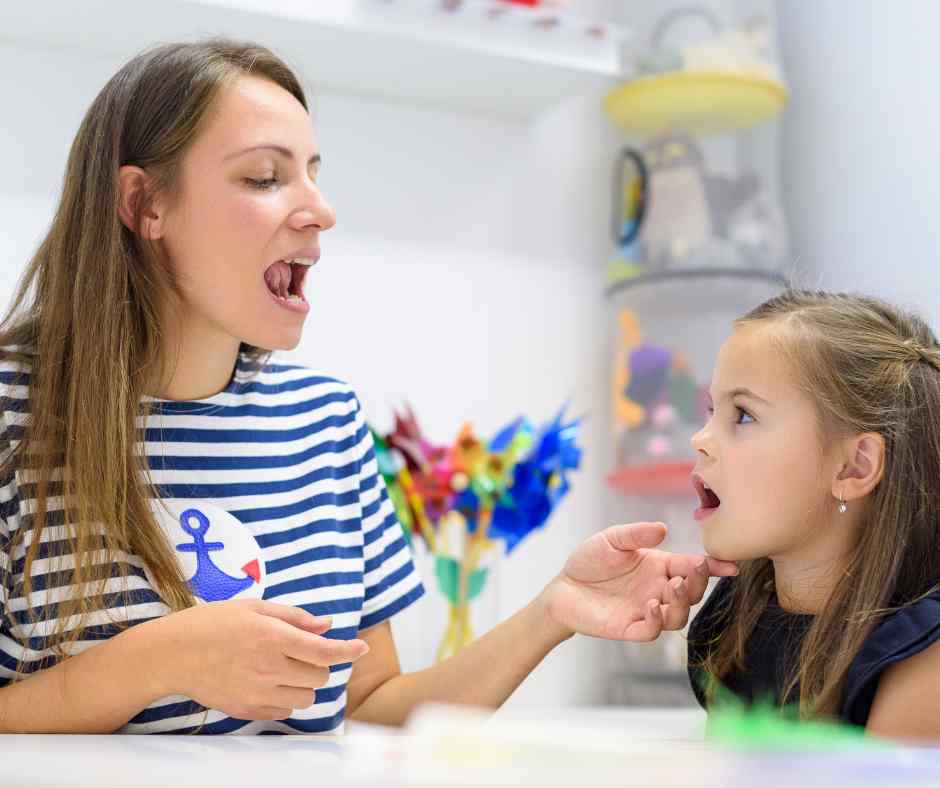
Our occupational therapists focus on ensuring children are regulated and ready to engage, before, during, and after sessions. Our speech therapists work on the language and communication layer: how to initiate, how to respond, how to repair a conversation that has drifted off course. Together, these two perspectives mean children receive support that addresses the whole picture, not just one part of it.
LEGO Therapy and the Narrative Skills Programme
Alongside the CONNECT Programme, Esperanza offers two supporting programmes that many parents find particularly valuable.
LEGO Therapy
LEGO-based therapy is an evidence-supported approach that uses collaborative LEGO building to develop social skills in a highly motivating, naturally structured context. Children work in small groups with assigned roles, including engineer, supplier, and builder, that require genuine communication, negotiation, and shared attention to complete a project together.
For children who find open-ended social interaction difficult but thrive in structured, task-focused settings, LEGO Therapy is often an excellent entry point. The shared goal gives interaction a clear purpose, which many autistic children find significantly easier to navigate than unstructured conversation.
The Narrative Skills Programme
Storytelling sits at the heart of how humans connect. We share experiences, build relationships, and make sense of the world through narrative. The Narrative Skills Programme supports children in developing the ability to tell coherent, purposeful stories about what happened to them, what they observed, and what they imagined.
For autistic children who find it difficult to organise and share personal experiences in a way that others can follow and engage with, this programme builds a genuinely important social bridge.
What Happens at Your First Assessment
Before any group placement, every child at Esperanza goes through a comprehensive initial assessment. The purpose is not to categorise or label your child, but to understand where they are right now: what they find easy, what they find challenging, and what type of group setting would suit them best at this stage.
The assessment is carried out by a DHA-licensed therapist and involves structured observational activities. Your child does not need to perform in any particular way. We are simply looking at how they naturally engage with tasks and interactions in a comfortable clinical environment.
Following the assessment, you will receive a clear, parent-friendly explanation of what the therapist observed and a recommended pathway. If a group programme is the right fit, we match your child with peers at a similar developmental stage. We currently offer groups across three broad age ranges: early years (ages 3 to 5), primary school (ages 6 to 10), and young teenagers.
No GP referral is needed to begin. You can contact us directly on WhatsApp to arrange a First Steps consultation, which is the starting point for all new families at Esperanza.
Supporting Social Skills at Home Between Sessions
Therapy sessions are where new skills are introduced, explained, and safely practised. Home and daily life are where those skills become real. Progress children make during CONNECT sessions is supported by practical carry-over strategies we share with you after each session.
Some of the most effective home supports are also the simplest. Reading stories together and pausing to discuss what a character might be feeling. Practising turn-taking in conversation at mealtimes. Gently narrating what you notice during social outings, without pressure or correction. Playing simple, structured games that require shared attention and co-operation.
Families who engage actively with home strategies consistently see faster, more durable progress than those who leave all the work to clinic sessions. Your involvement is not a bonus extra. It is a core part of how children make genuine gains. Our therapists will help you find approaches that fit naturally into your family’s daily rhythm.
When to Seek Support: A Note for Dubai Families
Esperanza is located in Al Karama, near the Central Post Office, and is easily accessible for families from across central and inner Dubai, including Bur Dubai, Oud Metha, Jumeirah, and the Sheikh Zayed Road corridor. Many of our families also travel from further afield, including Dubai Healthcare City and Downtown Dubai, and find the access straightforward via major arterial routes.
We work with families from a wide range of cultural and linguistic backgrounds. Our team is experienced in the multicultural reality of Dubai family life, and we understand that the social world your child is navigating may include Arabic, English, and several other languages all at once. That context matters to us, and we take it into account in how we design and deliver support.
There is no single right time to seek support. If you are noticing signs that your child is finding the social world difficult, reaching out now means starting sooner. Early support tends to be more effective, not because progress is impossible later, but because social habits, patterns, and self-perceptions begin to form early. Supporting those patterns while they are still forming is meaningfully easier than reshaping them once they are entrenched.
| You do not have to wait and wonder.A conversation with one of our therapists can give you real clarity about whether social skills support would benefit your child, and what that might look like in practice. The First Steps consultation is free, conducted by a licensed therapist, and designed for exactly this moment. |
Frequently Asked Questions
Is it normal for autistic children to struggle with social skills?
Yes. Difficulty with social communication and interaction is one of the core characteristics of autism. This does not mean autistic children do not want to connect with others. Many very much do. It means that the implicit rules of social life are often harder to read and navigate without explicit support. Social skills training provides the structured teaching and guided practice that makes those rules visible and manageable.
At what age should social skills therapy start?
There is no single answer, because children come to therapy at different stages and with different profiles. In general, the earlier support begins, the more time a child has to build and consolidate skills. Esperanza currently works with children from age 3 upwards. If your child is older, the moment has not passed. Progress is possible at every age, and our assessment will identify the right starting point for your child.
Does my child need a formal autism diagnosis before starting?
No. A diagnosis can be helpful in understanding a child’s profile, but it is not a requirement for beginning therapy at Esperanza. Many families come to us with concerns but without a formal assessment. We evaluate your child as an individual, regardless of diagnostic status, and design support around what we observe.
What is the difference between group therapy and individual therapy for social skills?
Individual therapy is where foundational skills are introduced and practised in a lower-pressure environment. Group therapy is where those skills are applied in real social situations alongside peers, with immediate, genuine feedback. Both have value, and for many children they run alongside each other. Your child’s therapist will advise on the right combination based on the initial assessment.
How long does it take to see progress in social skills therapy?
This varies considerably and depends on the child’s starting point, the frequency of sessions, and the level of home practice between sessions. Many families begin to notice changes within the first few weeks of group work, particularly in terms of confidence and willingness to engage. Building durable social skills is a longer process, typically measured in months rather than weeks. We review goals regularly and keep you closely involved throughout.
Is social skills therapy available in Arabic at Esperanza?
We work with families from across Dubai’s diverse communities, and our team includes multilingual practitioners. Please mention your language preference when you contact us, and we will ensure your child’s support is culturally and linguistically appropriate.
Ready to Take the First Step?
If you have been reading this and recognising your child in what you are reading, that recognition is worth acting on. Social skills are not fixed, and children do not have to navigate the social world alone.
Our First Steps consultation is free, conducted by a DHA-licensed therapist, and designed for exactly this moment. It is not a commitment to a programme. It is a conversation, a chance to be heard, to have your questions answered, and to understand what support might look like for your child specifically.
WhatsApp us: 00971555241094
Address: Office 42B, Zomorodah Building B Block, near Central Post Office, Al Karama, Dubai
Hours: Monday to Saturday, 9 am to 7 pm
Serving families from Al Karama, Bur Dubai, Oud Metha, Jumeirah, Dubai Healthcare City, Sheikh Zayed Road, and beyond.