It is one of the questions parents of newly diagnosed children carry silently for a long time, sometimes before they have even said it out loud to anyone. Not just: will my child hear? But: will my child go to school with other children? Will they make friends? Will they be able to do the same things?
These are not small questions. They are questions about the whole shape of a life.
This article is written for that moment of wondering. It explains what mainstream school readiness actually means for a child with a cochlear implant, what Auditory-Verbal Therapy tracks on the path to school entry, how our Cochlear Implant Therapy programme supports children with hearing differences, how Dubai’s school system is structured to support them, and what families can do at each stage to give their child the strongest possible foundation.
If you would like to understand where your child currently sits on that journey, our First Steps consultation is a supportive starting point. And for families already in the middle of the process, our AVT programme tracks school readiness milestones from the earliest weeks after switch-on.
1. What Mainstream School Readiness Actually Means for a Child with a Cochlear Implant
School readiness is a term that gets used a lot, but for children with cochlear implants it has a specific meaning that goes beyond the general markers of social and emotional development that apply to all children.
For a child with a cochlear implant, school readiness means having developed enough of the following to participate meaningfully in a mainstream classroom environment:
- Functional listening in noise. Classrooms are noisy. Children need to be able to follow teacher speech from a distance, often with background noise from other children, air conditioning, or hard flooring.
- Sufficient spoken language. The child needs enough vocabulary and sentence structure to follow instructions, understand explanations, and communicate with peers and adults.
- Phonological awareness. This is the ability to hear and manipulate the sound structure of words. It is the foundation of reading and spelling and is tracked specifically in AVT in the years before school.
- Device management awareness. At school age, a child needs to be able to communicate when their device is not working, tell a teacher their battery has run out, and understand the basics of what their cochlear implant does.
- Social communication. The ability to initiate and sustain interaction with peers, follow conversational rules, and participate in group activities.
This is not a checklist that every child must complete perfectly before the first school day. It is a framework that guides the therapy and preparation process. Many children enter mainstream school with some areas stronger than others, and continue to develop during the school years with therapy support running alongside classroom learning.
| Key Insight: School readiness for a child with a cochlear implant is about having a functional foundation, not perfection. Listening in noise, spoken language, phonological awareness, device awareness, and social communication are the key domains. |
2. What AVT Tracks on the Path to School Entry
One of the most important functions of Auditory-Verbal Therapy, beyond the therapy itself, is the ongoing tracking of a child’s auditory and language development against developmental norms. This tracking gives families and clinical teams a clear picture of where a child is on the journey and what needs to happen next.
From the earliest weeks after cochlear implant activation, an AVT therapist at Esperanza monitors a structured hierarchy of auditory skills. These progress from basic detection, through discrimination and identification, to comprehension and production of language. At each stage, the therapist also watches for the language and communication skills that build on the auditory foundation.
As a child approaches school age, the focus of AVT shifts specifically towards the skills that determine classroom participation. These include listening at distance, following multi-step instructions, understanding academic vocabulary, and developing phonological awareness.
For families who want to understand how their child’s development compares to school readiness benchmarks, Esperanza offers school assessments that provide a detailed picture of strengths and areas for targeted support in the year before entry.
| Key Insight: AVT tracking begins at activation and follows a structured hierarchy through to school-specific skills. The shift towards classroom listening, academic vocabulary, and phonological awareness happens in the years directly before school entry. |
3. The AVT Milestone Tracker: From Activation to School Age
The table below shows what AVT is tracking at each stage of the journey from early activation to school age, and why each stage matters for mainstream school readiness.
| Stage | AVT Milestones Being Tracked | Why It Matters for School |
| Early activation to 18 months | Detection, discrimination, and identification of speech sounds. Babbling and vocalisation. Device tolerance building. | These are the foundations of all language. Without them, nothing above can develop. Starting early maximises the available developmental window. |
| 18 months to 3 years | Vocabulary growth. Two and three word combinations. Following simple instructions. Understanding of everyday language. | This is when spoken language begins to emerge in a form that looks like communication. It predicts future classroom participation. |
| 3 to 4 years | Narrative skills. Question forms. Conversational turn-taking. Listening in light background noise. | Nursery and pre-school readiness. Children at this stage begin to participate in group settings and peer interaction. |
| 4 to 5 years | Complex sentence structures. Story comprehension. Listening at distance. Phonological awareness and early literacy. | Direct preparation for school entry. Phonological awareness is the bridge between listening and reading. |
| 5 years and approaching school | Classroom listening in noise. Following multi-step instructions. Academic vocabulary. Self-advocacy awareness. | These are the skills that determine whether a child can participate fully and independently in a mainstream classroom. |
Every child’s progression through these stages is individual. Age at implantation, duration of hearing deprivation before implant, device wearing consistency, and the quality and frequency of early intervention all influence the pace. The direction of progress, consistently supported over time, is what matters most.
| Key Insight: The AVT journey from switch-on to school readiness follows a structured developmental pathway. Each stage builds on the one before. Consistent input and specialist therapy across all five stages give children the strongest foundation for school entry. |
4. How Dubai’s KHDA Framework Supports Children with Hearing Loss
Dubai’s private school system is regulated by the Knowledge and Human Development Authority, known as the KHDA. The KHDA framework includes specific provisions for children with disabilities, including hearing loss, which are relevant for every family navigating school enrolment.
Inclusion in private schools. The KHDA framework requires licensed private schools in Dubai to make reasonable adjustments for students with disabilities. This includes students who use cochlear implants or hearing aids. Schools are not permitted to refuse enrolment on the basis of hearing loss alone.
The SENCO role. Every licensed private school in Dubai is required to have a designated Special Educational Needs Coordinator, known as the SENCO. The SENCO is responsible for coordinating the support provided to children with additional needs, including liaising with external therapists, overseeing individual education plans, and advising class teachers on classroom adjustments.
Individual Education Plans. For children with identified needs, schools can develop an Individual Education Plan, or IEP. This is a written document that sets out the specific support a child will receive, the goals being worked towards, and how progress will be measured. Families can request an IEP for their child and are entitled to be involved in its development.
Inspection and accountability. The KHDA inspects schools and evaluates how well they are supporting students with additional needs. A school’s provision for children with disabilities is part of its overall inspection rating.
It is important to note that the quality and experience of SENCO provision varies between schools. A school that states it has experience supporting children with hearing devices, and can describe what that looks like in practice, is a better choice than one that simply says it is inclusive in general terms.
| Key Insight: Under the KHDA framework, Dubai private schools are required to make reasonable adjustments for children with hearing loss. The SENCO role, Individual Education Plans, and KHDA inspection accountability all create a supportive framework for inclusion. |
5. What to Tell a School Before Enrolment
Many parents worry that disclosing their child has a cochlear implant will affect the school’s willingness to offer a place. In practice, under the KHDA framework, schools cannot refuse enrolment on the basis of hearing loss alone. And in the experience of families who have navigated this process across Dubai, from Karama and Oud Metha to Downtown Dubai and Trade Centre, transparent early communication with the school almost always leads to better outcomes than delayed disclosure.
Information that is helpful to share before or at enrolment:
- A brief explanation of what a cochlear implant is. Many teachers have never worked with a child who uses a cochlear implant. A simple, non-clinical explanation of how the device works and what it provides helps enormously.
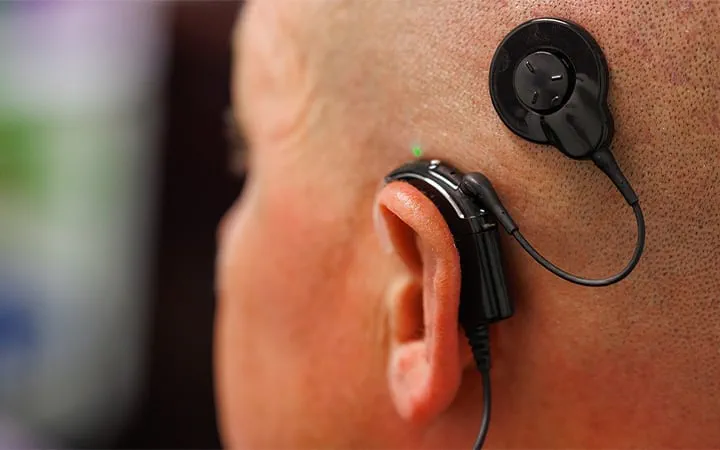
- What the device looks like and how it is worn. Sharing a photograph or bringing the device to the meeting removes the unfamiliarity that can make teachers nervous about supporting the child.
- What happens if the device stops working during the day. Give the school a clear protocol: what the child should do, who to call, and what the child can do in the meantime.
- Your child’s current level of listening and language. A brief summary from the AVT therapist, or a copy of the most recent therapy report, gives the school context they need to plan appropriately.
- Whether an FM or radio aid system is recommended. If your AVT therapist or audiologist has recommended a radio aid for classroom use, let the school know early so they can prepare teachers and check compatibility with existing equipment.
| Key Insight: Transparent and early communication with the school before enrolment creates the conditions for a successful transition. Schools that are well-informed are better placed to support a child with a cochlear implant from the first day. |
6. Questions to Ask the SENCO Team
Before committing to a school, it is worth meeting the SENCO and asking specific questions. The answers will quickly indicate whether the school has genuine experience supporting children with hearing devices, or whether their inclusion commitment is more aspirational than practical.
| Question to Ask the School or SENCO | What a Good Answer Looks Like |
| Do you have experience supporting children with hearing devices in the classroom? | The school has supported at least one child with a hearing aid or cochlear implant before and can describe what that looked like in practice. |
| How is the classroom acoustically managed? Is there background noise from air conditioning or hard flooring? | The school is aware of acoustic factors and is willing to discuss seating arrangements and classroom placement. |
| Is a radio aid or FM system available, and do teachers know how to use it? | The school either has a radio aid system or is open to the family providing one, and teachers have received or are willing to receive training in its use. |
| How does the SENCO communicate with external therapists? | The school has a process for receiving reports from therapists and incorporating recommendations into the child’s classroom support plan. |
| What is the school policy on therapy pullout sessions during the school day? | The school allows for scheduled pullout sessions if needed and coordinates these to minimise disruption to core learning time. |
| How will teachers be informed about my child’s hearing device and what to do if it stops working? | The school has a protocol for this, or is willing to develop one, including who to contact and what the child should do in class if the device malfunctions. |
| Key Insight: Specific questions produce specific answers. A school that can describe what it has done for children with hearing devices in the past is far more reliable than one that speaks only in general terms about inclusion. |
7. How Esperanza Coordinates with School Teams
The transition from full-time therapy to mainstream school is not a handover. For most children with cochlear implants, therapy continues alongside schooling, and the relationship between the clinical team and the school is an active one.
Esperanza’s approach to school transition includes several specific elements.
Written transition reports. In the year before school entry, Esperanza prepares a detailed written report that summarises the child’s auditory and language development, current strengths, areas for continued support, and specific classroom recommendations. This report is written for the school team as well as the family.
SENCO liaison. With family permission, Esperanza communicates directly with the school’s SENCO to discuss recommendations and ensure that the therapy goals and the classroom support plan are aligned.
Classroom acoustics advice. Esperanza can advise on seating placement, classroom layout, and acoustic management strategies that make a meaningful difference to a child’s listening experience in school.
FM system guidance. Where a radio aid or FM system is recommended, Esperanza works with families and the school to ensure the system is in place and that teachers have received basic training before the child starts.
Ongoing therapy during the school years. Therapy at Esperanza continues for as long as it is clinically indicated. Sessions are scheduled to work around school hours where possible, and the therapy focus shifts to the specific language demands of the classroom as the child progresses through school.
For families accessing speech and language therapy and cochlear implant therapy at Esperanza, this coordinated approach to school transition is a standard part of the clinical journey, not an add-on.
| Key Insight: Esperanza supports the school transition through written reports, SENCO liaison, classroom acoustics guidance, FM system support, and continued therapy aligned to classroom demands throughout the school years. |
8. What Happens to Therapy Frequency as School Age Approaches
One of the most common questions families ask in the years before school is whether therapy will need to stop when their child starts school. The answer, for most children, is no. But the nature and frequency of therapy does change.
In the early years after activation, when the brain is building its auditory pathways from scratch, therapy frequency is typically highest. Weekly sessions, sometimes twice weekly, are common. As the child’s auditory and language skills consolidate and become more automatic, and as the family becomes more confident in embedding listening strategies at home, therapy frequency can reduce.
In the year before school entry, the focus of sessions shifts towards school-specific skills. The therapist works on classroom listening, phonological awareness, academic vocabulary, and self-advocacy. This is often one of the most productive periods of the AVT journey.
After school entry, many children continue with fortnightly or monthly sessions. These maintain progress, address any new challenges that emerge in the classroom environment, and provide the school with updated clinical guidance. For some children, therapy can be reduced to a monitoring and review basis as skills solidify. For others, more active support continues through the early school years.
The pace of reduction is always guided by clinical assessment and by the child’s needs, not by a fixed schedule.
Families in Karama, Oud Metha, Trade Centre, and Downtown Dubai who attend Esperanza regularly find that building therapy into a weekly routine before school makes the eventual transition to reduced frequency feel natural rather than abrupt. Esperanza is easy to reach from across central Dubai, and the team schedules sessions to fit around school timetables wherever possible.
| Key Insight: Therapy frequency reduces as a child approaches school age, but does not stop at school entry for most children. The focus shifts to school-specific skills before entry, and continued sessions during the early school years support academic language and classroom listening. |
9. A Realistic and Hopeful Picture of What Is Possible
Research and clinical experience consistently show that children with cochlear implants who receive early implantation, consistent full-time device use, and specialist Auditory-Verbal Therapy from the earliest possible point are able to develop listening and spoken language skills that are comparable to those of hearing peers.
These children go to mainstream schools. They make friends. They learn to read. They participate in class. They develop self-worth and confidence. They lead independent lives. They become young people who happen to have a cochlear implant, not young people defined by it.
This is not a guarantee for every child. Every journey is shaped by individual factors. Age at implantation matters. Duration of hearing deprivation before implantation matters. Device wearing consistency matters enormously. The quality and frequency of early intervention matters.
What clinical experience at Esperanza has consistently shown, across the full spectrum of families from across Dubai’s communities, is this: the families who approach the journey with commitment, who attend therapy consistently, who embed listening into daily life at home, and who advocate confidently for their child at school, give their children the best possible chance of the life they are imagining for them right now.
The hope you are feeling is not naive. It is directional. And the work that turns that hope into reality starts early, and builds, one listening moment at a time.
If your child has been recently diagnosed with hearing loss, or if you are preparing for cochlear implant surgery and want to understand what comes next, our early intervention team is here to help you navigate the pathway ahead.
Frequently Asked Questions
Can a child with a cochlear implant go to a mainstream school in Dubai?
Yes. With early implantation, consistent device use, and specialist Auditory-Verbal Therapy, many children with cochlear implants develop listening and spoken language skills comparable to hearing peers by school age. Under the KHDA framework, Dubai private schools are required to make reasonable adjustments for children with hearing differences and cannot refuse enrolment on the basis of hearing loss alone.
What is AVT school readiness and how is it measured?
AVT school readiness refers to a child having developed sufficient listening, spoken language, phonological awareness, and classroom listening skills to participate in a mainstream school environment. An AVT therapist tracks these milestones across the developmental journey and advises families on readiness for school entry. A formal school assessment can provide a detailed picture in the year before entry.
What is a SENCO and how do they support children with cochlear implants in Dubai schools?
A SENCO, or Special Educational Needs Coordinator, is a designated member of school staff responsible for coordinating support for children with additional needs. In Dubai private schools, the SENCO manages individual support plans, liaises with external therapists, and ensures classroom adjustments are implemented for children with hearing devices.
Does my child need to be completely fluent before starting mainstream school?
No. School readiness for a child with a cochlear implant is about having a functional foundation of listening and language skills, a consistent device, and a supportive school environment. Many children continue therapy during the school years and make their strongest language gains in the early years of mainstream schooling.
Should my child continue speech therapy after starting school?
Yes, for most children. Therapy frequency often reduces as school entry approaches and the child becomes more independent, but therapy during the early school years supports academic language, literacy, and classroom listening skills. Esperanza coordinates with school teams to ensure therapy and classroom goals are aligned.
What is an FM or radio aid system and does my child need one at school?
An FM or radio aid system transmits the teacher’s voice directly to the cochlear implant processor, reducing the impact of distance and background noise in the classroom. Many children with cochlear implants benefit from FM systems in noisy classroom environments. Whether it is recommended depends on the individual child and their school setting.
How does Esperanza support the transition from therapy to mainstream school?
Esperanza prepares written transition reports for the school team, coordinates with the SENCO on classroom adjustments, advises on device management, and supports families in preparing for school conversations. The clinic continues to provide therapy support alongside schooling for as long as it is clinically indicated.
Which schools in Dubai support children with cochlear implants?
Under the KHDA framework, all licensed private schools in Dubai are expected to make reasonable adjustments for children with hearing loss. The level of experience varies between schools. Families are advised to meet with the SENCO before enrolment, ask specific questions about acoustic management and device support, and request a written inclusion plan.
| School readiness begins long before the first day of school.If your child has a cochlear implant and you are thinking about the journey to mainstream school, Esperanza is here to guide your family with the clinical support and long-term perspective that makes the difference.WhatsApp us at 00971 55 5241094 for a First Steps consultation.esperanzaelc.com |